The Social Media Content Framework: Building a Content Plan That Engages, Builds Trust and Drives Growth
Creating content consistently is one thing. Creating content that informs, engages, builds trust and drives business growth is another.
For many businesses, social media content planning becomes a cycle of posting promotional messages, celebrating special occasions and sharing updates without a clear strategy behind them.
An effective content plan requires more than a calendar of posts. It needs a structured approach that connects what your brand offers, what your audience wants to know and how your business communicates its value.
We have a framework built around three key elements: Content Pillars, Content Guide, and Voice & Tone. These provide the foundation for a consistent, purposeful and engaging social media presence.
1. Start With Your Content Pillars
Content pillars are the main areas your brand consistently talks about online. They provide direction for your content and ensure that your social media communication remains relevant to your business.
Your primary content pillars should reflect your products, services and programs.
For each pillar, explore six aspects to develop a wider range of useful content:
HOW → WHAT → WHEN → WHY → WHERE → WHO
- HOW: How does your product or service work? How is it used, maintained or accessed?
- WHAT: What does it involve? What problems does it solve? What options are available?
- WHEN: When should someone use it? When is the right time to take action?
- WHY: Why does it matter? Why should someone consider it? Why do certain challenges occur?
- WHERE: Where can it be accessed, purchased or used?
- WHO: Who is it designed for? Who qualifies? Who can benefit from it?
One service can generate dozens of useful content ideas without repeatedly publishing the same promotional message.
To make your content plan even more manageable, consider dedicating a particular day of the week to a specific product, service or program. This creates consistency while helping your audience become more familiar with what your brand offers.
2. Develop Your Content Guide
Once your content pillars are established, decide what types of content you will consistently create.
Your content guide defines the formats and approaches you will use to communicate your brand’s messages. It helps you move beyond promotional posts and develop a balanced mix of content that serves different audience needs.
Our Social Media Engagement Framework highlights 15 content categories to consider when developing your plan.
Educational and value-driven content
- Educational content: Share tips, best practices, answers to frequently asked questions, reports and case studies.
- Blog posts: Publish useful insights on your website and repurpose them for social media.
- Tutorials: Demonstrate how to complete a task, use a product or solve a problem.
- Quotes: Share relevant, thought-provoking and inspiring messages.
- Question of the day: Ask questions connected to your audience’s business, life or lifestyle.
Brand storytelling and credibility
- Videos: Feature testimonials, product or service highlights, brand stories and podcast conversations.
- Digital PR: Highlight moments with clients, partners and staff, brand achievements, industry developments and company news.
- Influencer marketing: Collaborate with relevant influencers who can help amplify your brand’s awareness and reach.
- Live content: Share insights through webinars, livestreams and platforms such as Instagram, TikTok and YouTube.
- Current events: Create relevant content around holidays, industry events and other timely occasions.
Engagement and community building
- Contests and games: Use quizzes, polls, challenges and competitions to encourage participation.
- Joining relevant online conversations: Contribute meaningful comments to discussions related to your industry and expertise.
- Memes: Use relevant humor to make your brand more relatable and shareable.
Promotional and conversion-focused content
- Sales content: Communicate offers, discounts, giveaways and promotions on your products or services.
- Hashtag marketing: Use relevant hashtags to help categorize content and connect with conversations. Where appropriate, develop campaigns around a branded hashtag.
Not every category needs equal attention, and not every format will suit every business. Your content guide should reflect your audience, industry, resources and marketing objectives.
The goal is to create a balanced content mix that helps you INFORM → ENGAGE → BUILD TRUST → DRIVE ACTION.
3. Establish Your Brand Voice and Tone
Your brand voice is your brand’s personality. Your tone is how that personality is expressed in different situations.
For example, is your brand professional, friendly, authoritative, conversational, inspirational or playful?
You may adopt a professional tone when sharing industry insights, a friendly tone when responding to customer questions and an enthusiastic tone when celebrating a milestone. The expression changes, but the underlying brand personality should remain recognizable.
Define your preferred language, level of formality, use of humor, terminology and approach to audience interaction.
Most importantly, ensure your communication remains consistent across TikTok, Facebook, Instagram, LinkedIn and other relevant platforms.
A clear voice and tone help audiences recognize your brand, understand your messages and develop familiarity with your business over time.
Bringing It All Together: Your Social Media Content Plan
The three elements work together to provide a practical structure for content planning.
CONTENT PILLARS → CONTENT GUIDE → VOICE & TONE
- Content Pillars: Determine what your brand needs to talk about, starting with its products, services and programs.
- Content Guide: Decide how you will communicate those messages using a balanced selection of content categories and formats.
- Voice & Tone: Establish how your brand will sound and how it will express its personality across different situations and platforms.
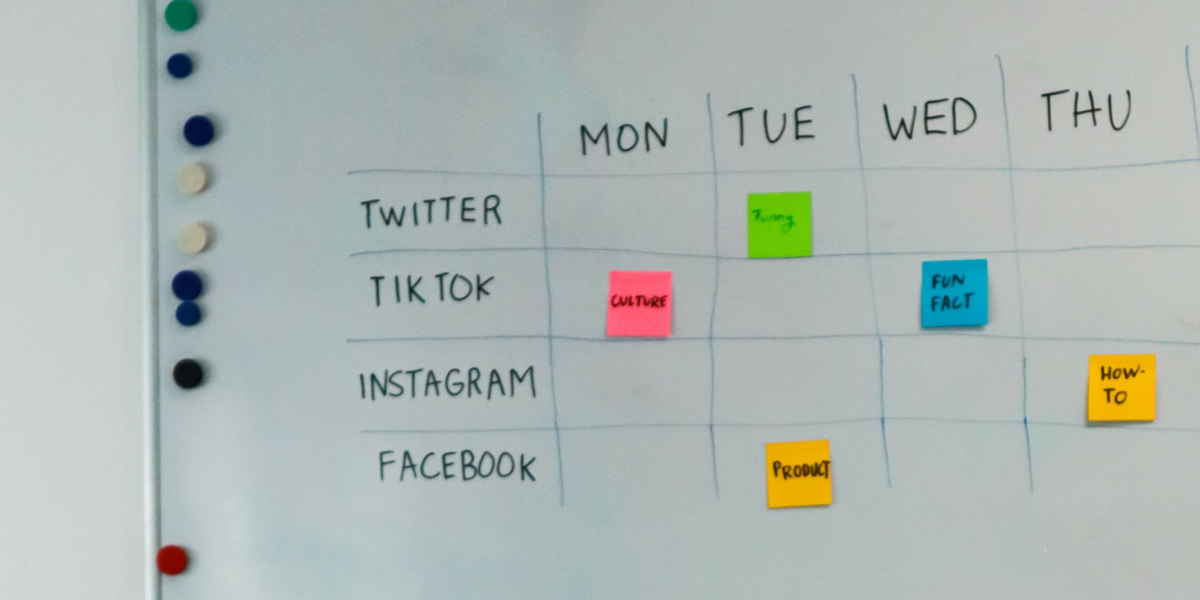
From there, translate the framework into a content calendar. Assign topics to dates, select suitable formats, define the objective of each post and establish the call to action where relevant.
For example, a single service could inspire an educational carousel explaining how it works, a short video answering a frequently asked question, a customer testimonial demonstrating its value and a promotional post encouraging enquiries.
Each piece of content serves a different purpose while supporting the same business objective.
Turn Your Content Into a Growth Tool
Social media content planning should not be about filling your calendar with posts. It should be about communicating your brand’s value consistently, creating meaningful audience interactions and guiding potential customers towards taking action.
With clearly defined content pillars, a practical content guide and a consistent brand voice, your business can move from posting randomly to communicating strategically.
We help businesses strengthen their brands, improve their digital marketing and develop customer conversion processes that support business growth.
Ready to make your social media content more strategic?
Let’s help you build a content plan that connects your brand’s value with your audience.